
Imagine waking up to the sound of rushing water in your Toronto home, only to discover that heavy rainfall or a burst pipe has turned your living room into a shallow pool. Floods can strike suddenly in our city, especially during intense spring thaws or summer storms common in areas like North York or the Distillery District. As a homeowner, the shock is real, but acting quickly can prevent further devastation. In this guide from Toronto Water Damage Restoration, we’ll walk you through essential emergency tips to safeguard your family, property, and peace of mind. Whether you’re in High Park or Kensington Market, these steps are tailored for Toronto’s unique climate and urban challenges.
Immediate Safety Measures
Your first priority after a flood is safety. Water mixed with electrical hazards or structural instability can turn a bad situation deadly. Toronto’s older homes in neighbourhoods like Davisville Village often have basements prone to flooding, so don’t delay.
Ensure Personal Safety
Before touching anything, evacuate everyone from the affected area. If the water is deep or moving quickly—common during severe storms in Toronto—avoid entering until professionals assess it. Check for hazards like downed power lines, especially if the flood came from outside, as our city’s grid can be overwhelmed during heavy rains. Wear protective gear: rubber boots, gloves, and a mask to guard against contaminants. In urban Toronto, floodwater can carry sewage from overwhelmed sewers, so treat it as hazardous.
If anyone has been in contact with the water, monitor for signs of injury or illness. For immediate medical help, call 911. Remember, in Toronto’s dense neighbourhoods, response times can vary, so prioritize getting to higher ground.
Shut Off Utilities
Once safe, turn off your home’s electricity at the main breaker to prevent shocks—never wade through water to flip switches. If you’re uncomfortable doing this, call a licensed electrician. Next, shut off the gas supply if there’s any risk of leaks, and close the main water valve to stop further inflow. In Toronto homes, where pipes can freeze in winter, burst lines are a frequent culprit; addressing this quickly avoids escalating damage.
For professional guidance on these steps, consider reaching out to experts who specialize in flood damage restoration. Our team at Toronto Water Damage Restoration is available 24/7 to assist Toronto residents.
Assessing the Damage
With safety secured, it’s time to evaluate the extent of the flood. This step helps you understand what needs immediate attention and what requires professional intervention.
Document Everything
Take photos and videos of the damage from multiple angles, including affected belongings and structural elements. This documentation is crucial for insurance claims, a process we streamline through our insurance claim assistance services. In Toronto, where home insurance policies vary, clear records can make or break your coverage—especially for events like basement flooding in North York, often linked to the Don River’s overflow.
Note the water source: clean from a pipe, or contaminated from sewers? This determines the urgency—grey or black water demands faster action to prevent health risks.
Identify High-Risk Areas
Focus on areas like electrical panels, HVAC systems, and wooden structures, which absorb water quickly. In Toronto’s humid climate, unchecked moisture can lead to warping floors or crumbling drywall within hours. Check for hidden damage behind walls, particularly in heritage homes in the Distillery District, where aesthetics matter as much as function.
If the flood affects your home’s contents, prioritize salvageable items. Our content salvage cleaning process can help recover valuables like furniture and electronics, preventing total loss.
Initial Cleanup Steps
While waiting for pros, start basic cleanup to limit secondary damage. Act within the first 24-48 hours to avoid mold, which thrives in Toronto’s damp weather.
Remove Standing Water
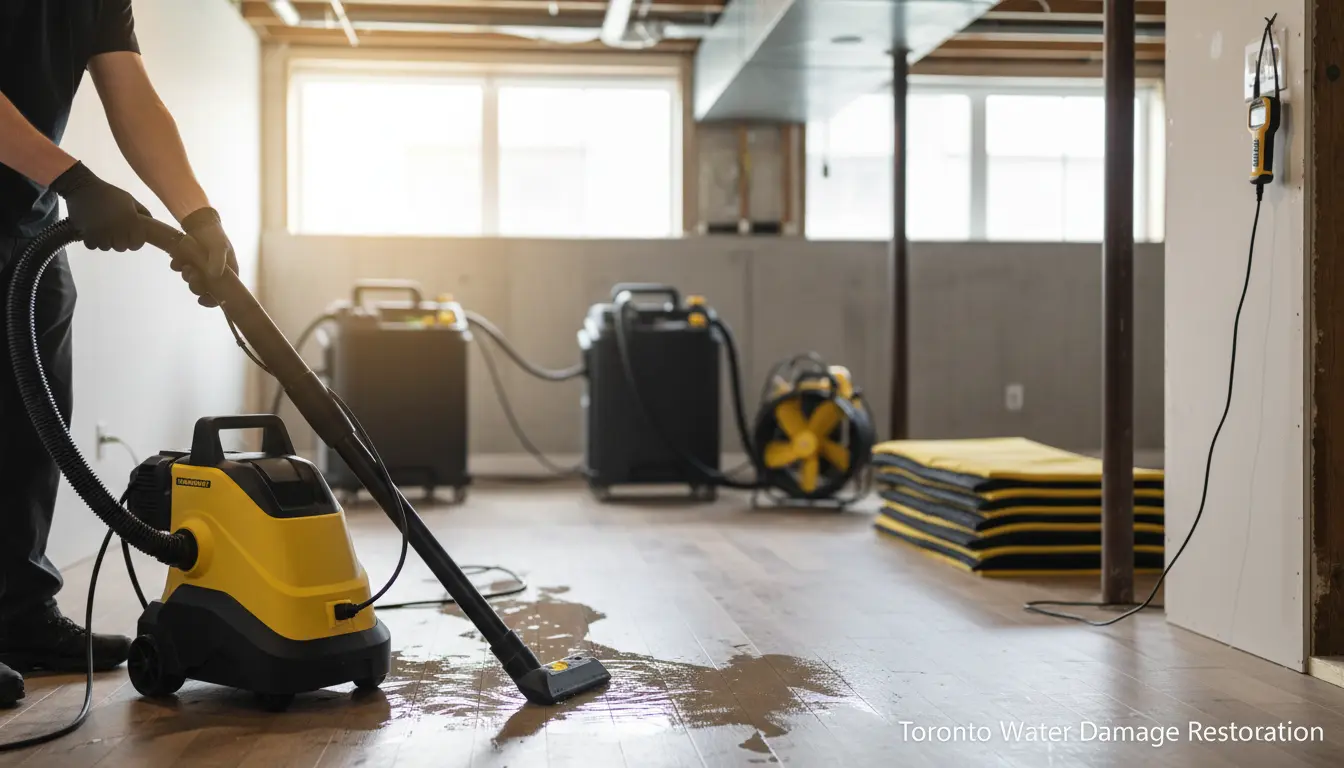
Use wet-dry vacuums, pumps, or buckets to extract water. For larger floods, rent equipment from local suppliers, but avoid DIY if the volume is overwhelming—our team handles this efficiently. In areas like High Park, where homes back onto ravines, groundwater floods can be deceptively deep; professional extraction is often necessary.
As you remove water, ventilate the space by opening windows and doors, weather permitting. Toronto’s variable climate means you might need fans or dehumidifiers to circulate air.
Dry Out the Space
Place fans and dehumidifiers strategically to promote evaporation. Focus on carpets, walls, and ceilings, which retain moisture. Avoid using household hairdryers for large areas—they’re ineffective and risky. For thorough drying, especially in hard-to-reach spots, our structural drying process uses advanced equipment to restore your home without demolition.
In Toronto’s cooler months, drying can take longer due to lower temperatures, so monitor humidity levels closely.
Preventing Mold and Further Damage
Mold can start growing in as little as 24 hours, leading to health issues like respiratory problems— a bigger concern in our city’s allergen-heavy environment.
Clean and Disinfect
Once dry, clean surfaces with a mix of water and mild detergent, then disinfect with a bleach solution (one cup per gallon of water) for non-porous items. For porous materials like drywall, removal may be needed if saturated. In Kensington Market’s eclectic homes, where spaces are tight, contamination spreads fast, so act decisively.
Discard heavily damaged items like soaked insulation or swollen wood to prevent ongoing issues. If biohazards are suspected, such as sewage, call specialists for biohazard remediation.
Monitor for Mold Signs
Look for musty odours or discolouration. If spotted, isolate the area and seek professional remediation. Toronto Water Damage Restoration uses industry-leading techniques to ensure your home in Davisville Village or elsewhere stays mold-free.
Long-Term Recovery Strategies
Beyond emergencies, plan for restoration to get your home back to normal.
Work with Professionals
DIY has limits; for comprehensive recovery, hire certified restorers. We serve all of Toronto, from condos in the core to houses in the suburbs, ensuring compliance with local building codes.
Rebuild Smarter
Consider flood-proofing: elevate appliances, install sump pumps, or improve drainage. In flood-prone Toronto spots like near the Humber River, these upgrades pay off during wet seasons.
FAQ
What should I do first if my Toronto home floods?
Prioritize safety: evacuate, shut off utilities, and avoid electrical hazards. Then, document damage and remove standing water if safe.
How quickly does mold grow after a flood?
Mold can begin in 24-48 hours, especially in humid Toronto conditions. Prompt drying is key to prevention.
Does homeowner’s insurance cover flood damage in Toronto?
It depends on your policy—standard policies cover sudden floods like burst pipes but not external ones. Contact your insurer and use our insurance claim assistance for help.
Can I clean up floodwater myself?
For clean water, yes, with precautions. For contaminated water, no—hire pros to avoid health risks.
How long does flood restoration take?
It varies: minor floods might take days, major ones weeks. Our team aims for quick, efficient service across Toronto.
Conclusion
A flood in your Toronto home is overwhelming, but with these emergency tips, you can mitigate damage and start recovering swiftly. From safety checks to initial cleanup, every action counts in our unpredictable weather. Don’t go it alone—Toronto Water Damage Restoration is here to help with expert, compassionate service. Call us today at (647) 365-5975 for a rapid response and get your home dry and safe again. Your peace of mind is our priority.