Severe Basement Flooding
Whether triggered by overwhelmed municipal storm drains or foundational seepage, executing proper basement flood recovery requires specialized extraction and extended dehumidification to dry out dense concrete.
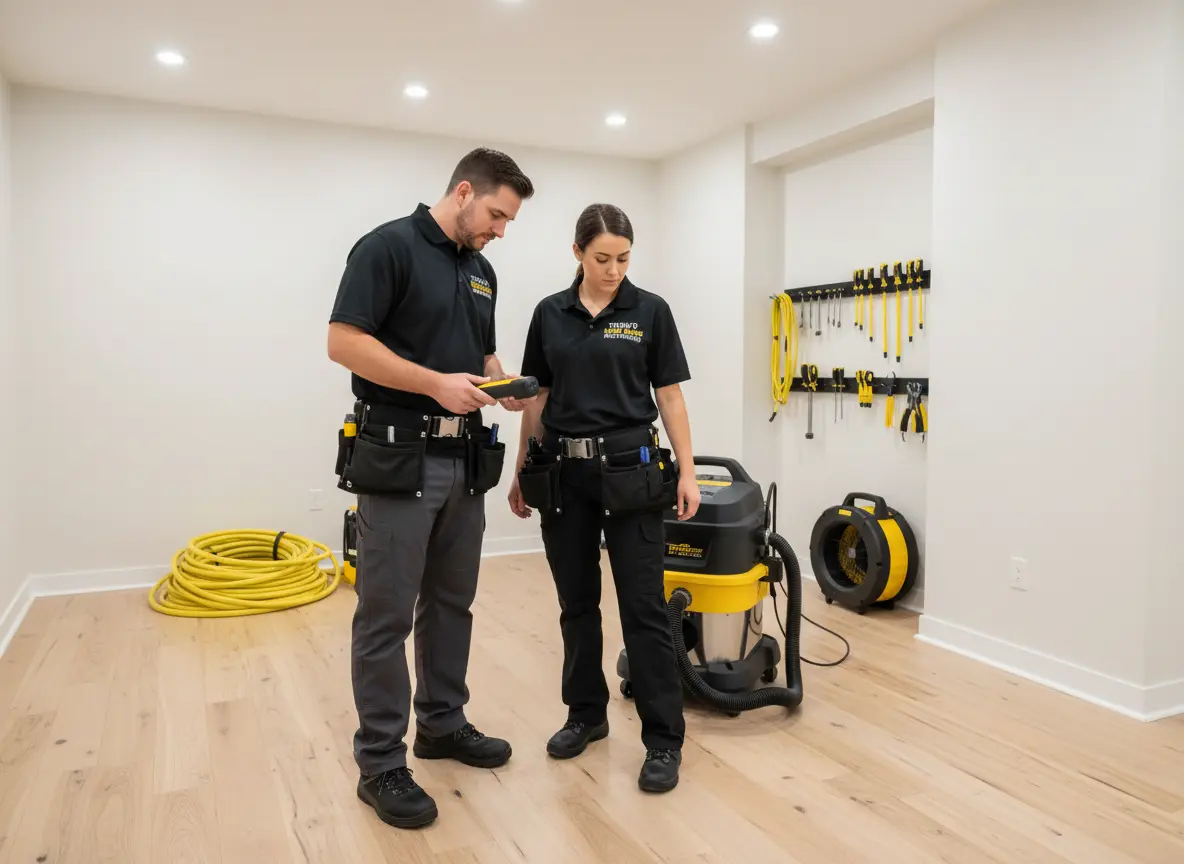
When catastrophic water damage strikes your home or commercial facility, simply extracting surface puddles is never enough. Capillary action forces moisture deep into your drywall, wooden framing, and subfloors, where it remains completely hidden from the naked eye. Without immediate, professional-grade psychrometric intervention, this deeply trapped moisture leads directly to aggressive mold colonization and massive structural decay. To better understand the severe risks of inadequate drying, we strongly recommend reading our expert guide outlining the signs hidden moisture is still behind your drywall after restoration.
At Toronto Water Damage Restoration, we specialize in highly calibrated, science-driven structural drying engineered to entirely eliminate deeply bound moisture without relying on destructive tear-outs. From mitigating flooded subterranean basements in North York to rescuing multi-level luxury condominiums in Yorkville, our IICRC-certified technicians ensure your property is restored rapidly and precisely. Do not let hidden moisture compromise your home’s foundational integrity—call our 24/7 emergency dispatch line at (647) 365-5975 for immediate local assistance.
Our drying protocol is not a generalized cleaning service; it is a highly calibrated, scientific process designed specifically to force bound water out of dense building materials without causing warping or secondary damage. Key technical interventions include:
Water damage is notoriously deceptive. Even after standard wet-vacuuming, massive amounts of moisture remain locked inside your property’s skeletal structure. You urgently require industrial structural drying if you have recently experienced:
Whether triggered by overwhelmed municipal storm drains or foundational seepage, executing proper basement flood recovery requires specialized extraction and extended dehumidification to dry out dense concrete.
Slow, continuous pinhole leaks originating from older galvanized pipes inside walls can saturate framing and insulation for weeks before becoming visible to the homeowner.
Ruptured supply lines connected to washing machines or dishwashers can rapidly inject hundreds of gallons of pressurized water directly across finished floors and down into the subfloor below.
Following any internal spill, if the indoor air feels incredibly heavy or you begin to detect pungent, musty odours, the air has reached its dew point, indicating that building materials remain severely saturated.
To successfully prevent structural decay and massive mold colonies, the drying process must be initiated within the very first 24 to 48 hours of water exposure. We adapt our specific psychrometric calculations to strictly account for Toronto’s variable seasonal climate.
If you have any problem regarding Structural Drying Process and Water Damage Restoration, please contact us or call at (647) 365-5975.
Copyright © October, 2026 Toronto Water Damage Restoration. All Rights Reserved . Sitemap